Every quarter, the same pattern repeats itself across enterprise boardrooms. Leadership teams gather to review strategic initiatives. The PowerPoint decks look impressive. The roadmaps are color-coded. The stakeholders nod in agreement.
Then nothing happens.
Research confirms what most CIOs already suspect: between 60% and 90% of well-designed strategies fail during implementation. The strategy-execution gap isn't a minor operational hiccup. It's the primary reason enterprise transformation initiatives stall, budgets balloon, and leadership teams lose confidence in their delivery organizations.
The problem isn't the quality of strategic thinking. Most organizations have brilliant strategists. The problem is what happens after the strategy leaves the conference room.
Why Slide-Deck Consulting Fails
Traditional enterprise transformation consulting follows a predictable pattern. Expensive consultants spend months analyzing your organization. They produce comprehensive strategy documents. They present elaborate frameworks. They hand over a 200-page implementation plan.
Then they leave.
What remains is a beautiful artifact with no connection to the messy reality of execution. The strategy document assumes perfect conditions: aligned stakeholders, available resources, clear governance, and zero organizational friction.
None of these assumptions survive contact with reality.

Slide-deck consulting treats strategy and execution as separate activities. Strategy happens in the boardroom. Execution happens somewhere else, by someone else, under someone else's responsibility. This artificial separation guarantees failure.
The fundamental flaw is simple: strategies that aren't designed for execution won't be executed.
The Execution-First Mindset
An execution roadmap starts from a different premise. Strategy and delivery aren't separate phases. They're integrated from day one.
This means asking different questions during the planning stage:
- Who will actually do this work?
- What dependencies exist that could block progress?
- Where does organizational resistance already exist?
- How will we measure progress in weeks, not quarters?
- What governance structure will enable quick decisions?
These aren't implementation details to worry about later. They're strategic considerations that determine whether your transformation will succeed or become another failed initiative.
The execution-first mindset acknowledges a truth that slide-deck consulting ignores: delivery complexity is strategic complexity. If your strategy doesn't account for the realities of delivery governance, resource constraints, and organizational culture, it's not a strategy. It's wishful thinking.

The Three Pillars of an Execution Roadmap
An execution roadmap bridges the strategy-execution gap through three integrated pillars:
1. Delivery Diagnostic
Before building any roadmap, you need ground truth. A Delivery Diagnostic assesses the current state of your delivery organization, governance structures, and program health.
This isn't a theoretical assessment. It's a practical evaluation of:
- Current delivery velocity and capacity
- Existing governance bottlenecks
- Skills and capability gaps
- Stakeholder alignment (or lack thereof)
- Hidden dependencies between initiatives
- Organizational friction points
The Delivery Diagnostic identifies where execution will break down before you commit resources. It transforms abstract strategy into concrete delivery plans grounded in organizational reality.
Most organizations skip this step. They assume their delivery organization can absorb any strategy the leadership team produces. This assumption explains why most transformations fail.
2. Senior Leadership Involvement
Execution roadmaps require active leadership engagement, not passive endorsement.
This means senior leaders participate in:
- Weekly delivery reviews (not monthly board presentations)
- Blocker resolution sessions
- Resource allocation decisions
- Governance escalations
When leadership treats execution as someone else's problem, delivery teams lack the authority to make critical decisions. Initiatives stall waiting for approvals. Dependencies go unresolved. Resource conflicts create bottlenecks.
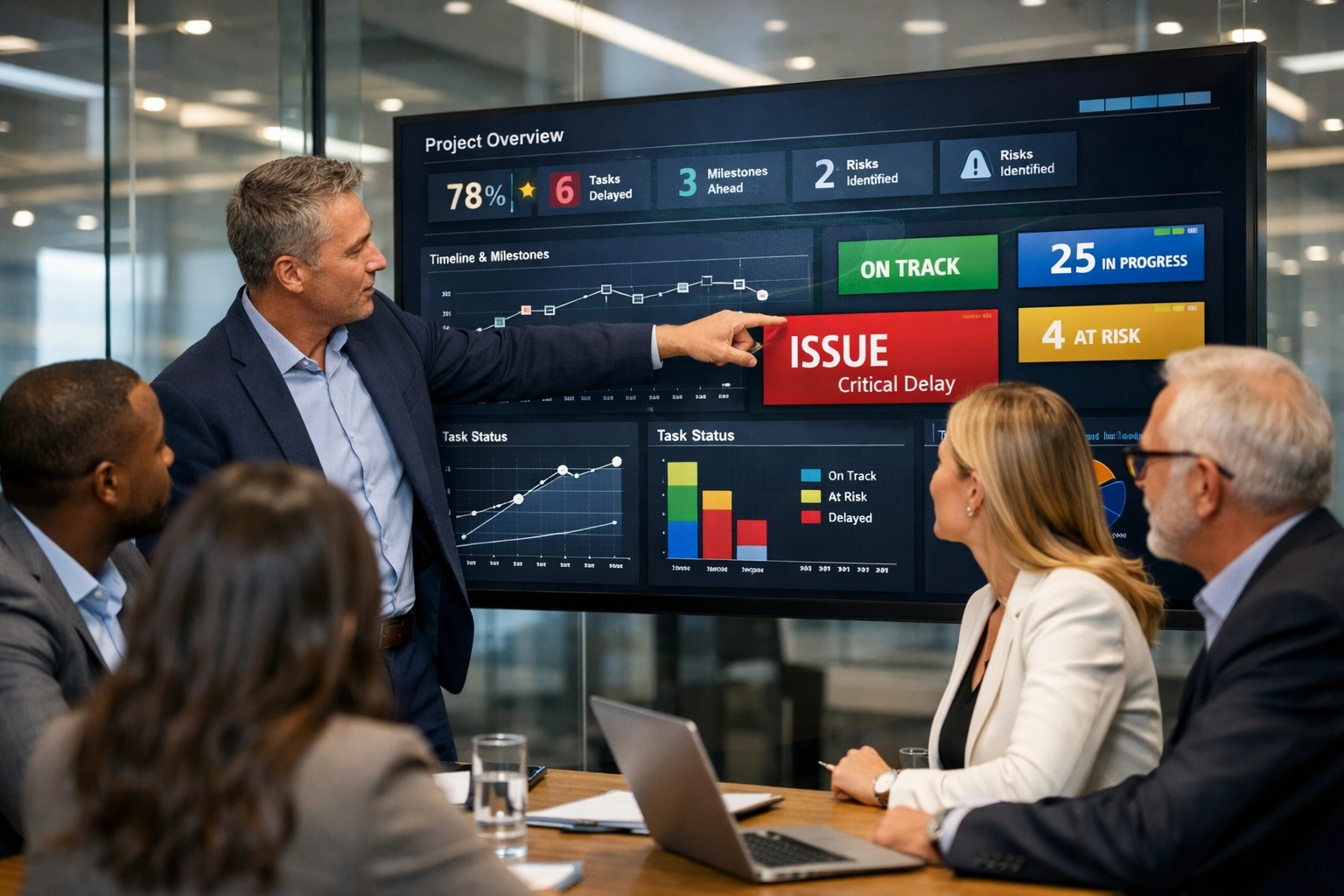
Active leadership involvement doesn't mean micromanagement. It means creating the conditions for effective delivery governance. Leaders who understand execution realities can make informed trade-offs, resolve conflicts quickly, and maintain organizational momentum.
The most successful enterprise transformation initiatives we've seen share one characteristic: senior leaders treat delivery governance as a strategic responsibility, not an operational afterthought.
3. Continuous Adjustment
Execution roadmaps aren't static documents. They're living frameworks that evolve based on delivery feedback.
This requires:
- Real-time progress tracking against concrete milestones
- Regular retrospectives that identify friction points
- Rapid decision-making processes for course corrections
- Clear accountability for adjustments
The traditional approach treats deviations from the plan as failures. The execution-first approach treats them as information. When delivery reality conflicts with planning assumptions, adjust the roadmap.
This doesn't mean abandoning strategic objectives. It means finding the most effective path to those objectives given current conditions.
Organizations that build continuous adjustment into their delivery governance can respond to changes in weeks, not quarters. They maintain momentum because they don't waste time pretending the original plan is still viable when everyone knows it isn't.
From Strategy Documents to Delivery Results
The execution roadmap methodology produces different artifacts than traditional consulting:
Instead of comprehensive strategy documents, you get one-page strategic plans with clear OKRs that teams can actually execute against.
Instead of theoretical implementation timelines, you get realistic delivery schedules that account for current capacity, dependencies, and organizational constraints.
Instead of organizational change management plans, you get concrete actions for the next two weeks with named owners and specific success criteria.

This specificity creates accountability. When everyone knows exactly what needs to happen next week, delivery teams can execute. When objectives are vague and timelines are theoretical, nothing moves forward.
The PMO Transformation Challenge
For many organizations, building an execution roadmap requires PMO transformation. Traditional PMOs focus on reporting status. Execution-first PMOs focus on removing blockers.
This shift requires different capabilities:
- Active risk management, not risk documentation
- Real-time resource optimization across portfolios
- Rapid escalation paths for critical decisions
- Delivery metrics that drive action, not just visibility
PMO transformation isn't a separate initiative. It's an essential component of any serious execution roadmap. Without effective delivery governance, even the best strategies will fail.
Building Your Execution Roadmap
If your organization struggles with the strategy-execution gap, start here:
Conduct a Delivery Diagnostic. Understand your current delivery capacity, governance structures, and organizational constraints before committing to any transformation initiative.
Engage senior leadership in delivery governance. Create weekly forums where leaders review progress, resolve blockers, and make resource decisions.
Start small with concrete milestones. Don't plan the entire transformation. Plan the next 30 days in detail and the next 90 days in broad strokes.
Build continuous adjustment into your governance model. Create rapid feedback loops that enable course corrections without bureaucratic delays.
The strategy-execution gap isn't inevitable. It's the predictable result of treating strategy and delivery as separate activities. When you integrate execution planning into strategic thinking from day one, your transformation initiatives move from impressive presentations to tangible results.
That's the difference between slide-deck consulting and execution-first enterprise transformation consulting. One produces documents. The other produces outcomes.
Great summary of the Delivery Diagnostic. In my experience, most leaders know what they want to do, but they lack the senior-level execution support to navigate the ‘messy middle’ of enterprise transformation. This roadmap is the missing link.