The conversation around platform modernization has fundamentally shifted. In 2026, 91% of technology companies are prioritizing generative AI development, and the enterprise infrastructure landscape is no longer just about cloud migration: it's about building systems that support autonomous AI agents.
If you're a CIO or CTO in a regulated sector, your platform modernization strategy needs to account for something entirely new: the Agentic Enterprise.
What Is the Agentic Enterprise?
The Agentic Enterprise runs on autonomous AI agents: intelligent systems that don't just respond to queries but execute complex workflows, make decisions within defined parameters, and orchestrate operations across your technology stack. Navigating this transition requires more than just staff augmentation; it requires dedicated product engineering services that understand the nuances of the Agentic Era.
These aren't chatbots. These are AI systems that:
- Autonomously access and process data from multiple sources
- Execute multi-step business processes
- Make context-aware decisions based on real-time information
- Integrate seamlessly with existing enterprise systems
Your current platform wasn't built for this. Most enterprise architectures were designed for human-driven workflows, not machine-to-machine orchestration at scale.

Why Cloud Migration Alone Won't Cut It
Moving workloads to the cloud solves infrastructure elasticity. It doesn't solve execution readiness for agentic AI.
Traditional cloud modernization consulting focuses on:
- Lift-and-shift migrations
- Infrastructure-as-code adoption
- Cost optimization
- Basic DevOps implementation
But agentic AI requires:
- Real-time data accessibility across siloed systems
- Event-driven architectures that agents can tap into
- API-first design for machine consumption
- Governance frameworks that support autonomous decision-making
- Security models that authenticate and authorize AI agents, not just users
The gap between these two realities is where most platform modernization initiatives fail.
The Two Critical Hurdles: Data Governance and Delivery Execution
Research shows that AI-driven modernization can cut migration time by 40% for certain projects. But speed without governance creates risk. Execution without proper delivery frameworks creates chaos.
Data Governance becomes exponentially more complex when AI agents need autonomous access. In regulated industries, you can't simply give agents carte blanche to your data estate. You need:
- Granular access controls at the data element level
- Audit trails for every autonomous action
- Real-time compliance validation
- Data lineage tracking for AI-driven decisions
Delivery Execution is where strategy meets reality. Most organizations have solid cloud strategies. Far fewer have execution roadmaps that account for:
- Legacy system dependencies
- Skill gaps in AI-native architectures
- Cross-functional coordination requirements
- Risk mitigation in regulated environments

The Execution-First Approach to Platform Modernization
An execution-first roadmap starts with delivery reality, not architectural idealism. It acknowledges that you have:
- Legacy systems that can't be replaced overnight
- Regulatory constraints that limit how fast you can move
- Teams with varying levels of cloud-native expertise
- Budget limitations that require phased approaches
The execution-first methodology follows three horizons:
Horizon 1: Stabilize and Expose
Introduce API layers in front of legacy data stores. Implement basic CI/CD pipelines. Make your existing systems accessible to AI agents without replatforming everything.
Horizon 2: Modernize Critical Paths
Identify the workflows that autonomous agents will execute most frequently. Apply cloud-native patterns to these paths first. Use dual-write strategies and synchronization jobs to gradually migrate data without disruption.
Horizon 3: Optimize and Differentiate
Deploy AI-assisted development tools. Implement serverless technologies for agent orchestration. Build AIOps capabilities using machine learning to detect anomalies and suggest remediations.
This phased approach is more practical than "big bang" migrations, especially for regulated enterprises where compliance and uptime are non-negotiable.

Building Infrastructure for Autonomous AI Agents
Your platform modernization roadmap must address specific technical requirements for agentic systems:
Event-Driven Architecture
AI agents operate best in event-driven environments where they can subscribe to business events and react autonomously. Your modernization plan should include message brokers, event streaming platforms, and event-sourcing patterns.
API-First Design
Every system component should expose well-documented APIs. AI agents consume APIs differently than human developers: they need consistent patterns, robust error handling, and machine-readable specifications.
Security by Default
Embed security into pipelines through automated dependency scanning, container image checks, and policy-as-code validation. Implement authentication mechanisms specifically designed for AI agents, including OAuth for machine-to-machine communication.
Observability for AI Actions
Traditional monitoring tracks system health. Agentic environments require observability that tracks what AI agents are doing, why they made specific decisions, and what business outcomes resulted.

The Delivery Diagnostic: Finding Execution Gaps Before They Derail Your Modernization
Most platform modernization failures aren't technical: they're organizational. The technology works. The delivery execution doesn't.
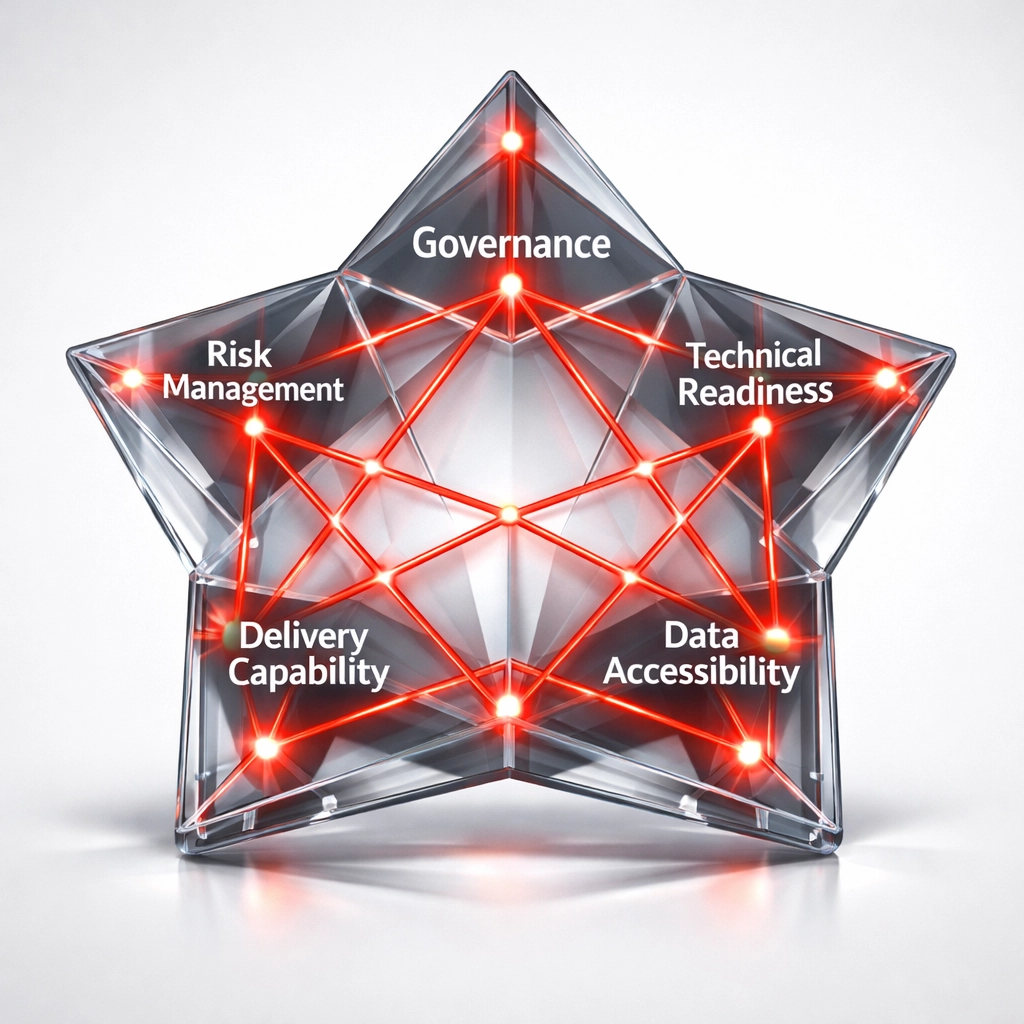
Dark Consultancy's Delivery Diagnostic identifies execution gaps across five dimensions:
- Governance Maturity: Do you have decision-making frameworks that support autonomous systems?
- Technical Readiness: Are your teams skilled in event-driven architectures and API-first design?
- Data Accessibility: Can AI agents reach the data they need without violating compliance requirements?
- Risk Management: Have you identified failure modes specific to autonomous agent operations?
- Delivery Capability: Can your organization execute a phased modernization while maintaining business operations?
The diagnostic produces an execution roadmap tailored to your specific constraints: regulatory environment, legacy dependencies, team capabilities, and risk tolerance.
This isn't theoretical. Organizations that modernize with execution-first roadmaps outperform those that lead with architecture-first strategies, particularly in regulated sectors where delivery risk can't be ignored.
Automation as an Execution Accelerator
As AI, security, and cloud services expand, technology stacks become more complex. IT teams are aggressively simplifying execution through automation rather than accepting complexity.
Automation benefits three key stakeholders:
- IT teams reduce manual effort and risk
- MSPs scale projects more efficiently
- End users experience fewer disruptions during transitions
Your execution roadmap should identify repeatable, high-risk operational tasks that can be automated: deployment pipelines, compliance validation, configuration management, and incident response.
What CIOs and CTOs Should Do Now
Platform modernization for the agentic era requires a different approach than traditional cloud modernization consulting. Start with these actions:
- Assess your data governance readiness for autonomous AI access
- Identify execution gaps that would derail a phased modernization
- Map your critical paths for AI agent workflows
- Build API layers in front of legacy systems
- Implement security-by-default in your delivery pipelines
The shift to agentic enterprises isn't optional. Organizations that build execution-first roadmaps now will have infrastructure that supports autonomous AI agents. Those that continue with lift-and-shift cloud migrations will find themselves replatforming again within 18 months.
If you're ready to build an execution roadmap for platform modernization that accounts for delivery reality in regulated environments, explore our approach to delivery governance or contact our team for a Delivery Diagnostic assessment.
The agentic era has arrived. Your platform modernization strategy should reflect that reality.